
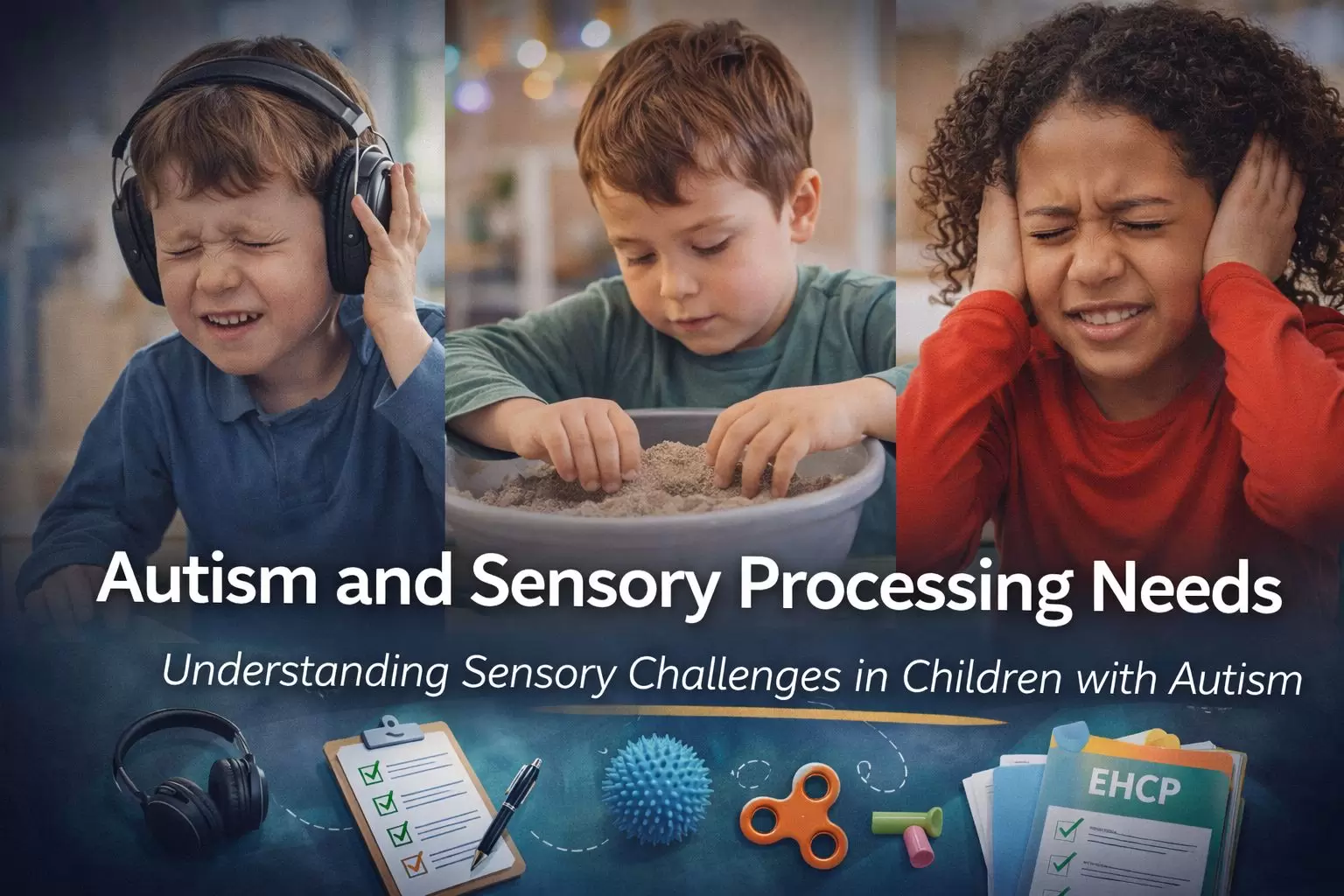
Autism and Sensory Processing Needs
Last reviewed: March 2026
Written by: School of Diversity SEND Support Team
Topic: Autism and Sensory Support
This guide explains how sensory processing differences affect autistic children, including common sensory sensitivities and strategies to support children at home and in school.
Many autistic children experience sensory processing differences, which can affect how they respond to sounds, lights, textures, smells and movement. These differences can impact learning, behaviour and emotional regulation.
Key Takeaways
- Sensory processing differences are common in autistic children.
- Children may be over-sensitive or under-sensitive to sensory input.
- Sensory needs can affect behaviour, learning and emotional regulation.
- Understanding sensory needs can help reduce overwhelm and anxiety.
- Schools and parents can use strategies to support sensory regulation.
Many autistic children experience the world differently through their senses. Sounds, lights, textures and environments that may feel comfortable for others can feel overwhelming or distracting for autistic children.
Understanding sensory processing differences can help parents and schools create environments that support children’s learning and wellbeing.
What Are Sensory Processing Needs?
Direct answer:
Sensory processing refers to how the brain receives and responds to sensory information.
This includes:
- sound
- light
- touch
- taste and smell
- movement and balance
Autistic children may process this information differently, which can affect how they experience everyday environments.
Types of Sensory Differences
Direct answer:
Autistic children may be either over-sensitive (hypersensitive) or under-sensitive (hyposensitive) to sensory input.
Over-sensitivity (Hypersensitivity)
Children may:
- find loud noises overwhelming
- be sensitive to bright lights
- avoid certain textures
- become distressed in busy environments
Under-sensitivity (Hyposensitivity)
Children may:
- seek strong sensory input
- enjoy movement such as spinning
- touch objects frequently
- have a high tolerance for noise or activity
Each child’s sensory profile is unique.
How Sensory Needs Affect Behaviour
Direct answer:
Sensory differences can influence behaviour, emotional regulation and learning.
Children may:
- become overwhelmed in noisy environments
- avoid certain activities
- struggle to concentrate
- experience meltdowns when overstimulated
Understanding sensory triggers can help reduce these challenges.
Sensory Needs in School
Many school environments can be challenging for autistic children due to sensory demands.
Common challenges include:
- noisy classrooms
- bright lighting
- crowded spaces
- transitions between activities
Schools can support sensory needs through adjustments and strategies.
Supporting Sensory Needs at School
Direct answer:
Schools can support sensory needs by adapting the environment and providing appropriate strategies.
Support may include:
- quiet or low-stimulation spaces
- sensory breaks during the day
- use of sensory tools
- structured routines
- clear and predictable environments
These adjustments can help children feel more comfortable and able to learn.
Supporting Sensory Needs at Home
Parents can also support sensory needs at home by:
- creating calm environments
- understanding sensory triggers
- providing sensory activities
- maintaining predictable routines
This helps children feel regulated and supported.
Sensory Needs and Emotional Regulation
Direct answer:
Sensory overload can affect emotional regulation and behaviour.
When children feel overwhelmed, they may:
- become distressed
- withdraw
- experience meltdowns
Supporting sensory regulation can help children manage emotions more effectively.
Sensory Needs and EHCP Support
Direct answer:
Some children with significant sensory needs may require additional support through an EHCP.
An EHCP may include:
- sensory support strategies
- specialist interventions
- environmental adjustments
- additional adult support
Understanding sensory needs can help ensure appropriate support is included in a plan.
FAQ
Are sensory issues part of autism?
Many autistic children experience sensory differences, but each child’s experience is unique.
Can sensory needs affect learning?
Yes. Sensory sensitivities can impact concentration, behaviour and engagement in school.
How can schools support sensory needs?
Schools can make adjustments to the environment and provide strategies to support sensory regulation
Do all autistic children have sensory sensitivities?
Not all children experience sensory differences in the same way.
Explore More Autism Guidance
If you are exploring autism support for your child, you may find these guides helpful:
- Signs Your Child May Be Autistic
- Autism Assessment for Children
- Autism Diagnosis and School Support
- Supporting Autistic Children in School
- EHCP for Autism
You can also explore our Autism Support for Parents hub, which explains autism signs, assessments and school support in more detail.