
EHCP guidance • England
EHCP for ADHD: a guide for parents
Understand when an assessment may be needed, what evidence can help and how a plan should describe your child’s support.
An ADHD diagnosis does not automatically lead to an EHCP. The focus is on your child’s special educational needs and the provision required to meet them.
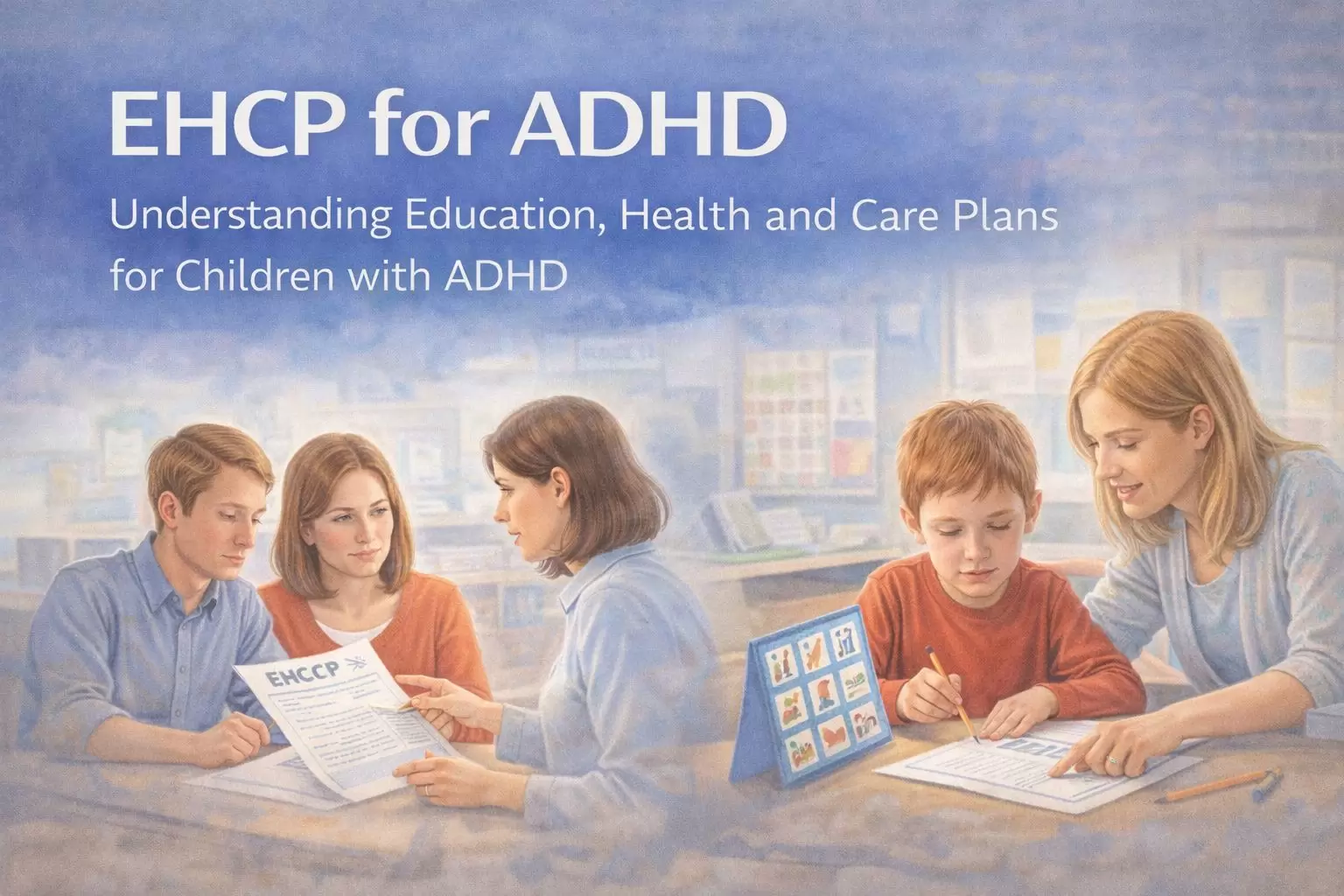
Two different decisions
Can a child with ADHD get an EHCP?
Yes, where the legal test for a plan is met. Diagnosis alone neither guarantees nor rules out an EHCP.
First: whether to assess
The local authority must carry out an EHC needs assessment where the child has or may have special educational needs and it may be necessary for special educational provision to be made through an EHC plan.
This is a decision about whether assessment is needed, not a requirement to prove the final plan is already necessary.
Then: whether to issue a plan
After assessment, the local authority must issue an EHCP where it is necessary for special educational provision to be made through a plan.
The assessment evidence informs this decision and the provision that should be specified.
EHCPs are part of the SEND system in England. Different education systems and terminology apply elsewhere in the UK.
Individual needs, individual provision
What support might an EHCP include?
These are examples to explore through assessment, rather than a standard package for every child with ADHD.
Attention and learning
Structured teaching, smaller task steps, visual instructions and planned checks of understanding.
Organisation
Support with planning, equipment, task initiation and transitions, including appropriate assistive technology.
Environment and movement
Changes to reduce distractions and provision for movement or regulation needs where identified.
Emotional regulation
A planned approach to recognising distress, accessing help and returning to learning safely.
Specialist input
Specialist teaching, interventions or professional advice where assessment identifies a need.
Adult support
Individual or small-group support with a clear purpose, amount and delivery arrangements where required.
Build a clear picture
What evidence can help?
Useful evidence explains the difficulty, its impact, what support has been provided and what remains unmet. A diagnosis can contribute, but does not describe every educational need.
School and professional information
- SEN support plans and review records.
- Examples of provision delivered and its impact.
- Teacher observations across lessons and less structured times.
- Relevant diagnostic, educational psychology or other professional reports.
Parent and child information
- Specific examples of difficulties and the help needed.
- Effects on routines, attendance, learning or wellbeing.
- Your child’s views, strengths and aspirations.
- What helps and where support is still insufficient.
Explain what the evidence shows
Link each document to the needs it helps explain. You do not need to purchase every possible private assessment before asking the local authority to assess.
Explore EHCP evidence guidance →From identified needs to clear support
What should Section F say?
Section B describes special educational needs. Section F specifies the special educational provision required to meet them.
Provision should be clear, detailed and specific, and normally quantified. A reader should be able to understand what must happen without guessing.
Check the detail
- What support or intervention is required?
- How often and for how long?
- Who will deliver it, with what expertise?
- Is it individual or group provision, and what group size?
- In which situations must it be available?
Question vague wording
“Access to support” or “regular help” may leave important details unclear. Ask how wording relates to assessed needs and professional recommendations.
Numbers should reflect evidence about your child, rather than a standard amount chosen for all children with ADHD.
A suitable educational environment
Does ADHD mean a specialist school is needed?
No. Some children attend mainstream settings with appropriate provision; others need a different environment. Placement decisions should reflect the individual child and the relevant legal framework.
Section I of a final EHCP names the placement and type. An ADHD diagnosis alone does not determine the setting or guarantee a particular school.
Taking the next step
Requesting assessment or responding to a refusal
Parents can write to their local authority to request an EHC needs assessment. Explain the needs and why special educational provision through a plan may be necessary. Keep a copy of the request and supporting information.
If the authority refuses to assess or refuses to issue a plan, read the decision letter and seek advice promptly about mediation advice requirements and appeal deadlines. Taking part in mediation is a choice; the rules about obtaining mediation advice are separate.
Common questions
EHCPs and ADHD
Does ADHD automatically qualify a child for an EHCP?
No. Decisions depend on special educational needs and whether provision through a plan is necessary. The assessment-stage test asks whether it may be necessary.
Can we request assessment without an ADHD diagnosis?
Yes. Describe the needs and educational impact. The legal test includes children who may have special educational needs.
Does my child have to be behind academically?
Do not focus only on attainment. Provide evidence about the wider educational impact and the support needed, including participation, independence and wellbeing.
Does an EHCP guarantee one-to-one support?
No. The provision must match assessed needs. If individual adult support is necessary, the plan should specify it clearly.
Can school support continue while we apply?
Yes. Continue discussing current needs, adjustments and SEN support while assessment or a decision is awaited.
Further information: GOV.UK EHC assessment and plan guidance; Children and Families Act 2014, section 36, section 37 and section 42.
Related guidance
Understand the wider EHCP process
School of Diversity
Need help making sense of your next step?
Tell us what is happening for your child and where you are in the EHCP process. We can discuss relevant support options.