
Last reviewed: March 2026
Written by: School of Diversity SEND Support Team
Topic: Education, Health and Care Plans (EHCP)
This guide is designed to help parents understand the EHCP process in England and is regularly updated to reflect SEND guidance and procedures.
EHCP Funding Explained: How EHCP Funding Works
EHCP funding helps schools provide the support described in an Education, Health and Care Plan for a child with special educational needs. In England, SEND support is usually funded through three levels: core school funding, the notional SEN budget (often up to £6,000), and additional high needs funding provided by the local authority. The most important part of an EHCP is the provision written in the plan, which the local authority must ensure is delivered.
Key Takeaways
EHCP funding helps schools provide the support described in an Education, Health and Care Plan.
SEND support is usually funded through three levels: core school funding, the notional SEN budget (often around £6,000), and additional high needs funding from the local authority.
Schools are generally expected to contribute up to around £6,000 of SEN support before requesting additional funding.
Additional funding may be provided when a child’s needs require more specialist or intensive support.
The most important part of an EHCP is the support written in Section F, which the local authority must ensure is delivered.
Many parents hear different things about EHCP funding and may be told that schools do not have the funding to support a child’s needs.
Understanding how EHCP funding works can help parents better understand the SEND system and how support for children with additional needs is funded.
An EHCP is not simply about funding. It is a legal plan that describes the support a child must receive, and funding is used to help deliver that support.
What is EHCP funding?
EHCP funding refers to the financial support used to provide the special educational provision described in an Education, Health and Care Plan.
This funding is provided through a system called high needs funding, which supports children and young people with more complex needs.
The purpose of the funding is to help schools provide the support outlined in the EHCP.
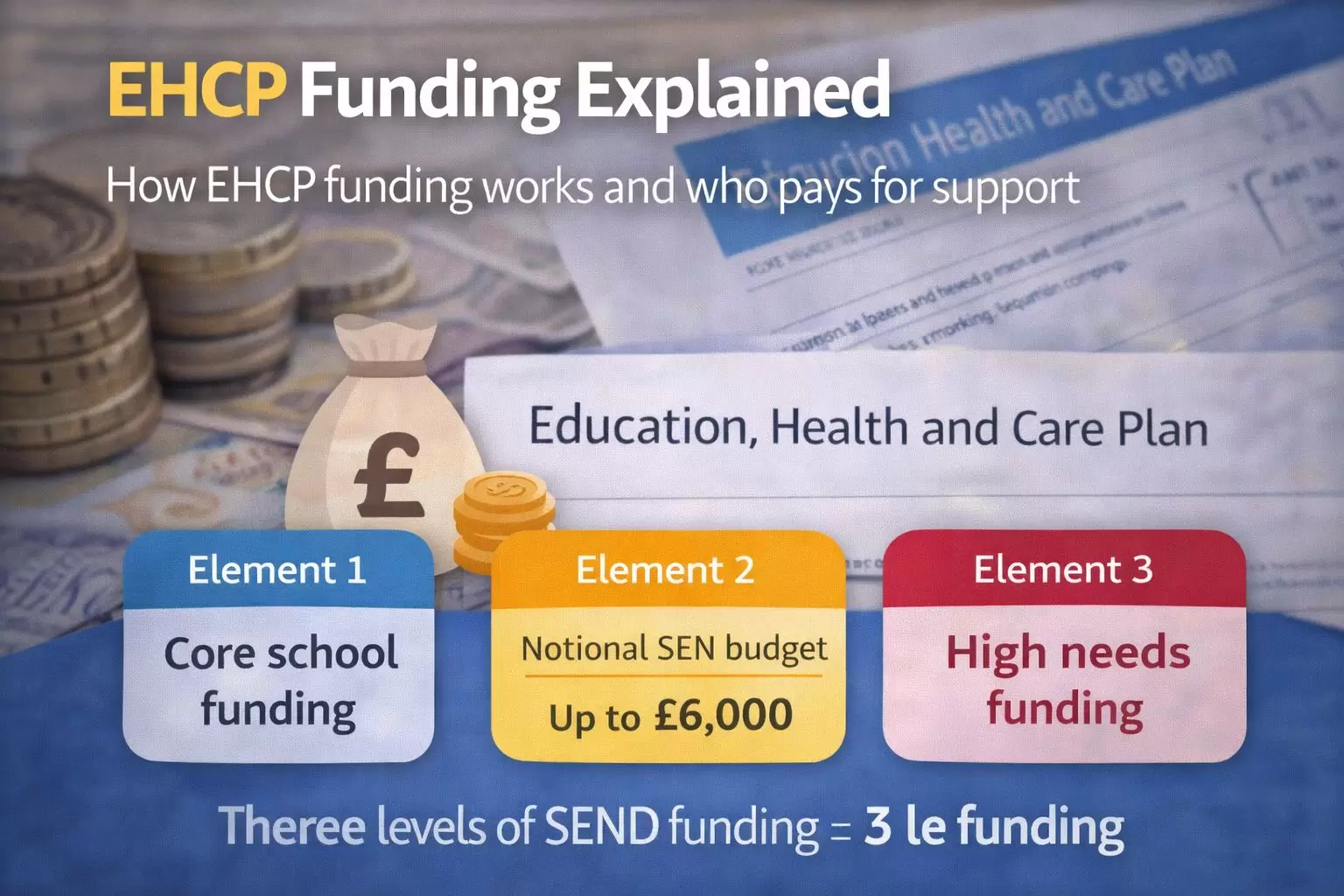
The three levels of SEND funding
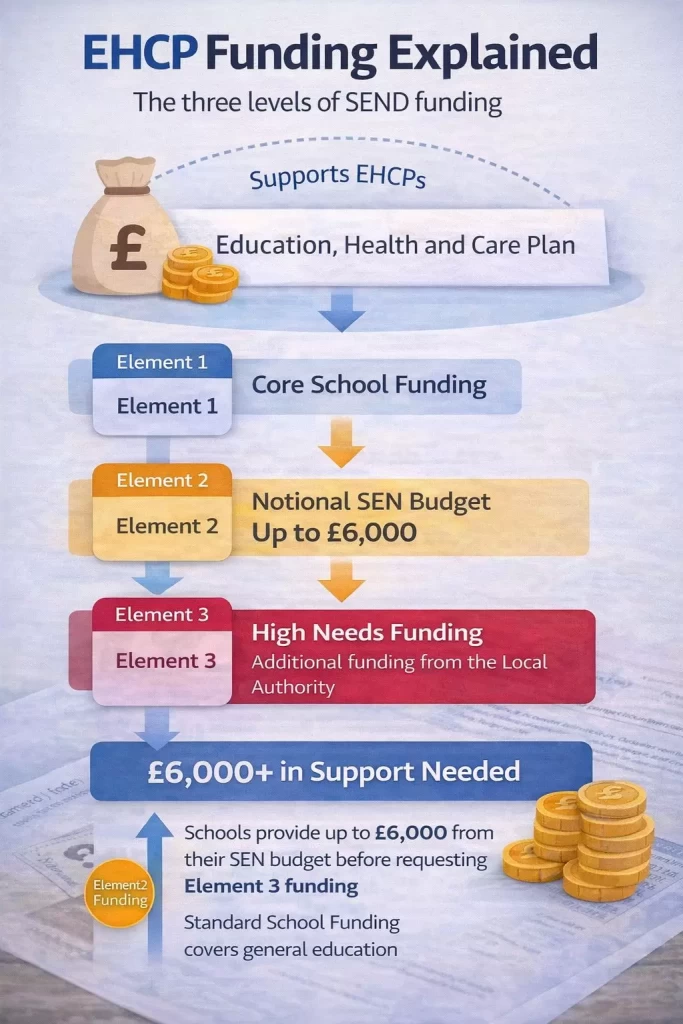
Support for children with special educational needs is usually funded through three different levels.
Element 1: Core school funding
All schools receive basic funding for every pupil. This funding is used to support teaching and learning for all students.
Some support for children with additional needs can be provided through this funding.
Element 2: Notional SEN funding
Schools also receive a notional SEN budget to support pupils with additional needs.
Schools are expected to contribute up to approximately £6,000 of support for a pupil with SEN before requesting additional funding from the local authority.
This funding may be used for:
Teaching assistant support
Small group interventions
Additional resources or adjustments
Element 3: High needs funding
When a child’s needs require support beyond what the school can reasonably provide, the local authority may provide additional high needs funding.
This funding is usually linked to an EHCP and helps fund the provision described in the plan.
Does an EHCP guarantee funding?
An EHCP guarantees that the provision written in the plan must be delivered.
The EHCP itself is the legal document that describes the support a child must receive.
Funding is used to help deliver that support, but the most important part of the plan is the provision described in Section F.
Why schools sometimes talk about funding
Parents are sometimes told that schools do not have the funding to provide certain types of support.
This can happen because:
School budgets are under pressure
There may be confusion about how SEND funding works
Schools may be trying to manage support within existing resources
However, the purpose of an EHCP is to ensure that children receive the support they need, even when their needs go beyond what schools can normally provide.
What parents should focus on
When reviewing an EHCP, the most important thing to focus on is not the funding amount, but the provision written in the plan.
Section F of the EHCP should clearly describe:
What support will be provided
Who will provide it
How often it will happen
This provision is legally enforceable.
EHCP funding and school resources
Funding arrangements can vary slightly between local authorities, but the overall structure of SEND funding is similar across England.
Schools and local authorities work together to ensure that the support described in an EHCP can be delivered.
Understanding EHCP funding can help parents feel more confident
Many parents feel unsure when discussions about funding arise. Learning how SEND funding works can help parents better understand the system and focus on what matters most: ensuring that the EHCP clearly describes the support their child needs.
EHCP Funding FAQ
How much funding does an EHCP provide?
There is no fixed amount. Funding depends on the level of support required to meet the child’s needs.
Do schools receive funding for children with EHCPs?
Yes. Schools may receive additional high needs funding from the local authority to support provision described in the EHCP.
What is the £6,000 SEN funding rule?
Schools are generally expected to contribute up to around £6,000 from their SEN budget before requesting additional funding from the local authority.
Does an EHCP guarantee 1:1 support?
Not necessarily. An EHCP guarantees the provision written in the plan, which may or may not include 1:1 support.
Explore more EHCP guidance
Understanding how EHCP funding works can help parents feel more confident when discussing support with schools and professionals. If you would like a broader overview of the process, you can explore our complete EHCP guide for parents, where we bring together all of our resources about Education, Health and Care Plans in one place. If you are still learning about how EHCPs work, you may find it helpful to read what an EHCP is and how the plan supports children with additional needs.
You may also want to understand the difference between SEN support vs EHCP, which explains when school-based support may no longer be enough. When reviewing a plan, our Section F wording examples can also help you understand how the support described in an EHCP should be written clearly and specifically.