
Last reviewed: March 2026
Written by: School of Diversity SEND Support Team
Topic: Education, Health and Care Plans (EHCP)
This guide is designed to help parents understand the EHCP process in England and is regularly updated to reflect SEND guidance and procedures.
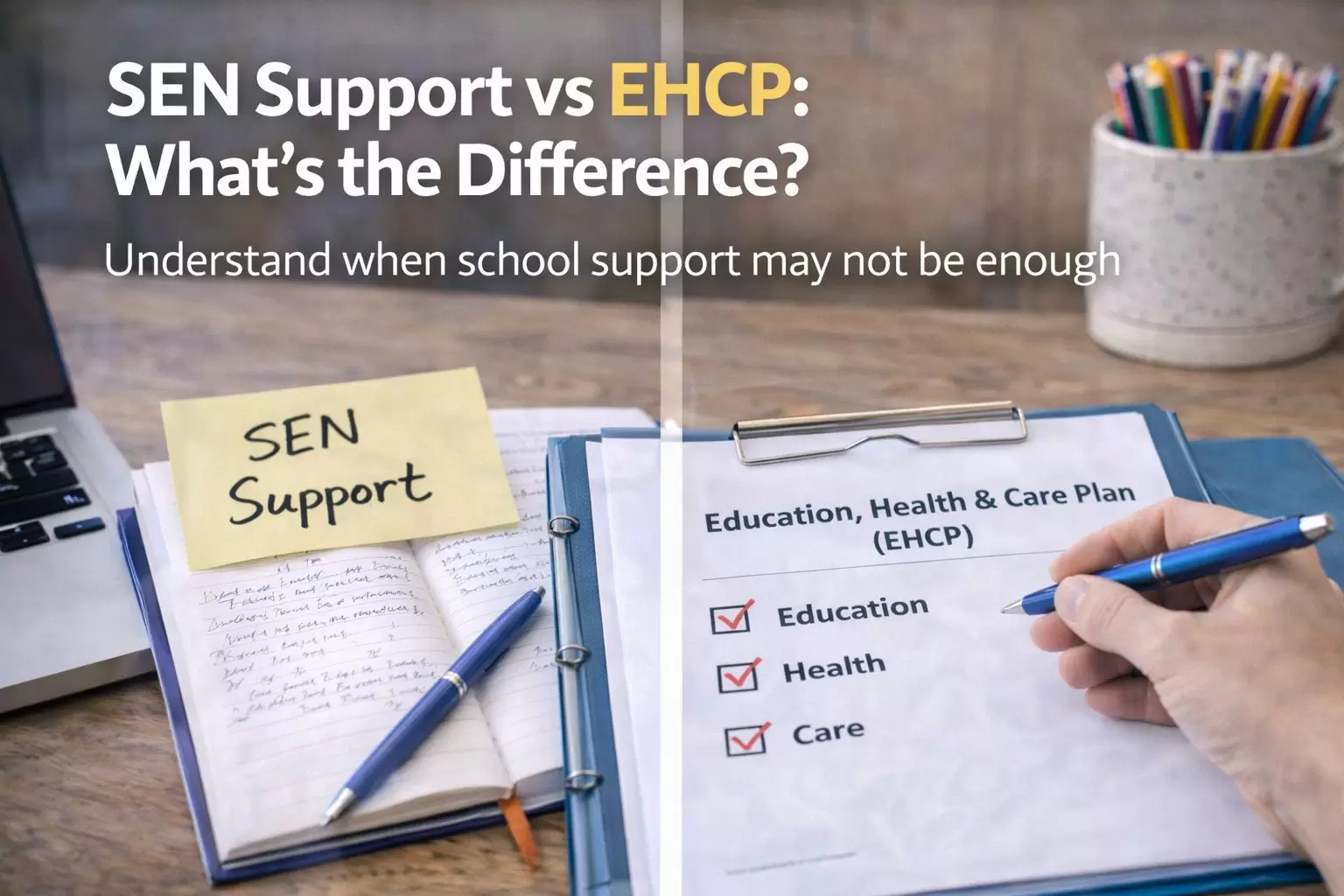
SEN Support vs EHCP: What’s the Difference?
SEN support is help provided by schools for children with special educational needs using the school’s own resources. An Education, Health and Care Plan (EHCP) is a legal plan issued by the local authority when a child needs more support than a school can reasonably provide through SEN support alone. The EHCP describes the child’s needs, the support they must receive, and the school they will attend.
Key Takeaways
SEN support is help provided by schools for children with special educational needs using the school’s own resources.
An Education, Health and Care Plan (EHCP) is a legal plan issued by the local authority when a child needs more support than a school can normally provide.
SEN support follows a graduated approach, where schools assess needs, plan support, deliver support, and review progress.
An EHCP is considered when a child’s needs are more complex or long-term and require additional specialist support.
The support written in an EHCP is legally enforceable, meaning the local authority must ensure it is provided.
Many children with additional needs receive SEN support at school. In some situations, however, a child may need an Education, Health and Care Plan (EHCP).
Understanding the difference between SEN support and an EHCP can help parents recognise when school support may not be enough and when an EHCP assessment might be appropriate.
What is SEN Support?
SEN support is the help schools provide for children with special educational needs using their own resources.
This support is arranged by the school and is part of the graduated approach.
SEN support may include:
Differentiated teaching
Small group interventions
Teaching assistant support
Adjustments to learning activities
Emotional support strategies
Schools should regularly review the support and adjust it based on the child’s progress.
What is an EHCP?
An Education, Health and Care Plan (EHCP) is a legal document issued by the local authority.
It is designed for children whose needs are more complex and cannot be met through SEN support alone.
An EHCP describes:
The child’s needs
The support required
Outcomes for the child
The school placement
Unlike SEN support, the provision in an EHCP is legally enforceable.
Key Differences Between SEN Support and an EHCP
| SEN Support | EHCP |
|---|
| Provided by the school | Issued by the local authority |
| Funded through school resources | Additional funding may be provided |
| Flexible support arranged by school | Legal document with specified provision |
| Reviewed regularly by school | Annual review required |
| Not legally enforceable | Legally enforceable support |
When SEN Support May Be Enough
SEN support may be sufficient if:
The child is making progress
Adjustments within school meet their needs
Support can be delivered through school resources
Difficulties are manageable within classroom support
Schools should review SEN support regularly and adapt strategies where needed.
When an EHCP May Be Needed
Parents may consider requesting an EHC needs assessment if:
SEN support is not helping the child make progress
Needs are complex or long-term
The child requires more intensive support
School resources are not enough to meet their needs
The child is experiencing significant distress or difficulty accessing learning
An EHCP may help ensure that the support required is clearly described and delivered consistently.
Can a child move from SEN Support to an EHCP?
Yes.
Many children start with SEN support and later move to an EHCP if their needs become clearer or support needs increase.
Parents or schools can request an EHC needs assessment when they believe SEN support is no longer sufficient.
Do children need a diagnosis for SEN support or an EHCP?
No.
A diagnosis is not required for either SEN support or an EHCP. Decisions should be based on the child’s needs and how those needs affect learning.
Understanding the graduated approach
Schools are expected to follow a process called the graduated approach, which includes:
Assess the child’s needs
Plan appropriate support
Deliver the support
Review progress
If this process does not meet the child’s needs, an EHCP may be considered.
Every child’s needs are different
There is no single point at which SEN support becomes an EHCP. Decisions are based on the child’s individual needs and how well current support is working.
Understanding the difference between these two types of support can help parents have more informed discussions with schools and professionals.
SEN Support vs EHCP FAQ
What is the main difference between SEN support and an EHCP?
SEN support is provided by the school using its own resources, while an EHCP is a legal plan issued by the local authority that specifies support a child must receive.
Does every child with SEN need an EHCP?
No. Many children receive effective support through SEN support without needing an EHCP.
Can parents request an EHCP if SEN support isn’t working?
Yes. Parents can request an EHC needs assessment if they believe their child’s needs are not being met through SEN support.
Is an EHCP legally enforceable?
Yes. The provision written in an EHCP must be delivered by the local authority and the school.
Explore more EHCP guidance
Understanding the difference between SEN support and an EHCP can help parents decide what type of support their child may need at school. If you would like a broader overview of the process, you can explore our complete EHCP guide for parents, where all of our EHCP resources are brought together in one place.
If you are still learning about how EHCPs work, our guide to what an EHCP is explains the purpose of the plan and how it supports children with additional needs. If you are wondering whether your child may need a plan, you may also find it helpful to read do I need an EHCP for my child?, which explains the signs that an assessment may be appropriate. If you are considering taking the next step, our guide on how to apply for an EHCP explains how parents can request an EHC needs assessment.