
Last reviewed: March 2026
Written by: School of Diversity SEND Support Team
Topic: Education, Health and Care Plans (EHCP)
This guide is designed to help parents understand the EHCP process in England and is regularly updated to reflect SEND guidance and procedures.
EHCP Refused – What to Do Next
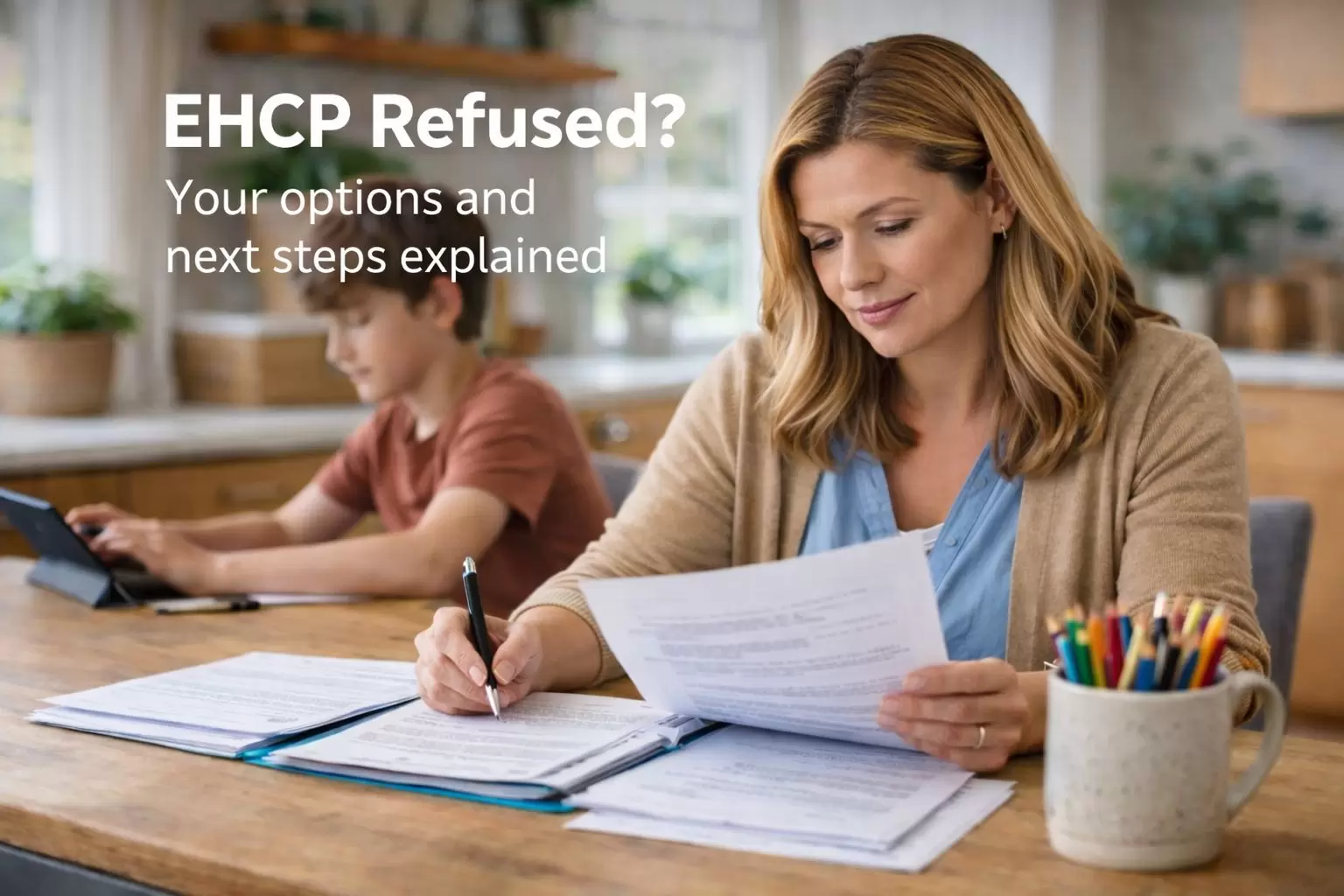
If an EHCP request is refused, parents have the right to challenge the decision made by the local authority. This may involve requesting mediation or appealing to the SEND Tribunal if parents believe their child’s needs require an Education, Health and Care Plan. Understanding the reasons for the refusal and gathering further evidence can help parents decide the next steps.
Key Takeaways
If an EHCP request is refused, the local authority should explain the reasons for the decision.
Parents have the right to challenge the decision through mediation or appeal to the SEND Tribunal.
Gathering additional evidence from school reports, professionals, and parent observations may help strengthen a case.
Parents can request advice from SEND support services or independent organisations if they need guidance.
Understanding the refusal and the available options can help parents decide the next steps in seeking support for their child.
Having an EHCP request refused can feel devastating — especially if your child is already struggling and you were hoping this would finally lead to support.
If your EHCP has been refused, it does not mean your child does not need help, and it does not mean the process is over. This guide explains why refusals happen, what your rights are, and what you can do next.
What does it mean if an EHCP is refused?
An EHCP refusal usually happens at one of two stages:
The local authority refuses to carry out an EHC needs assessment
The local authority completes an assessment but decides not to issue an EHCP
Both decisions can be challenged.
Why are EHCPs refused?
EHCPs are often refused because the local authority believes:
SEN support is sufficient
Evidence is not strong enough
Needs are not severe or complex
School resources should be enough
These decisions are not always accurate — and refusals are very common, even for children who later receive EHCPs.
My child’s EHCP was refused — does this mean they don’t qualify?
No.
A refusal does not mean:
Your child’s needs are not real
Your concerns are invalid
An EHCP will never be issued
It simply means the local authority has made a decision — one that you have the right to challenge.
What are my rights if an EHCP is refused?
Parents have the legal right to:
Receive written reasons for refusal
Appeal the decision
Access mediation (optional in some cases)
Provide additional evidence
You do not need school permission to appeal.
Step 1: Read the refusal letter carefully
The refusal letter should explain:
Why the request was refused
What evidence was considered
Your right to appeal
The deadline for taking action
Look closely at the reasons given — these often point directly to what needs strengthening.
Step 2: Decide whether to appeal
You may want to appeal if:
SEN support is not working
Your child is distressed or not accessing education
Evidence was misunderstood or ignored
Needs were minimised or dismissed
Many parents successfully appeal EHCP refusals, even after an initial “no”.
Step 3: Understand your appeal options
Mediation
Mediation gives you the chance to discuss the decision with the local authority. It can help clarify issues, but it does not replace your right to appeal.
SEND Tribunal
The SEND Tribunal is an independent legal process. Parents can appeal:
A refusal to assess
A refusal to issue an EHCP
Tribunals often rule in favour of families when evidence is clear.
Step 4: Strengthen your evidence
If appealing, it helps to:
Clarify how needs affect access to education
Show SEN support is not enough
Add parent observations
Highlight inconsistencies or gaps in support
Provide updated school or professional evidence if available
You do not need to prove failure — you need to show need.
Step 5: Remember timelines matter
Appeals must be lodged within strict deadlines, usually:
2 months from the refusal letter, or
1 month from mediation (if used)
Missing a deadline can limit your options, so acting promptly matters.
What if I don’t feel able to appeal right now?
It is okay to pause.
Some parents:
Gather more evidence
Reapply later
Seek advice or support
Focus on stabilising their child first
There is no single “right” path — only what is manageable for your family.
Common fears parents have after a refusal
“Appealing will make school relationships worse”
Advocating for your child is your right. Many schools understand this.
“Appeals are only for extreme cases”
Not true. Many successful appeals involve children whose needs were underestimated.
“I’ll lose if I try”
Many parents win appeals — especially with clear evidence.
You are not failing your child
EHCP refusals are often about systems and resources, not children or parenting.
Needing to challenge a decision does not mean you are difficult — it means you are advocating.
How School of Diversity supports parents
At School of Diversity, we provide clear, parent-focused guidance to help families understand refusals, appeals, and next steps — without pressure, judgement, or jargon.
EHCP Refused – Parent FAQs
What does it mean if an EHCP is refused?
It usually means the local authority believes SEN support is sufficient or evidence is not strong enough. It does not mean your child does not need support.
Can I appeal an EHCP refusal?
Yes. Parents have the legal right to appeal both a refusal to assess and a refusal to issue an EHCP.
How common are EHCP refusals?
EHCP refusals are very common. Many children who are refused initially later receive an EHCP after appeal.
Do I need school support to appeal?
No. You do not need school permission or agreement to appeal an EHCP decision.
What are my options after a refusal?
Parents can appeal, use mediation, gather more evidence, or reapply later. There is no single correct next step.
How long do I have to appeal an EHCP refusal?
You usually have 2 months from the decision letter, or 1 month from mediation, depending on your route.
Will appealing make things worse with the school?
Advocating for your child is your right. Many schools understand that appeals are part of the SEND process.
What evidence helps with an appeal?
Clear evidence showing unmet need, lack of progress, distress, or SEN support not being sufficient is particularly important.
Explore more EHCP guidance
If an EHCP request has been refused, it can be helpful to understand the wider process and the options available to parents. You can explore our complete EHCP guide for parents, where all of our resources about Education, Health and Care Plans are brought together in one place. If you are considering making another request, it may help to review what evidence you need for an EHCP, which explains the types of information that can support an application. You may also want to understand how long an EHCP takes, so you know what to expect if an assessment goes ahead. If your child already has a plan in place or you are reviewing a draft, our EHCP checklist for parents can help you check whether the support in the plan is clearly described.