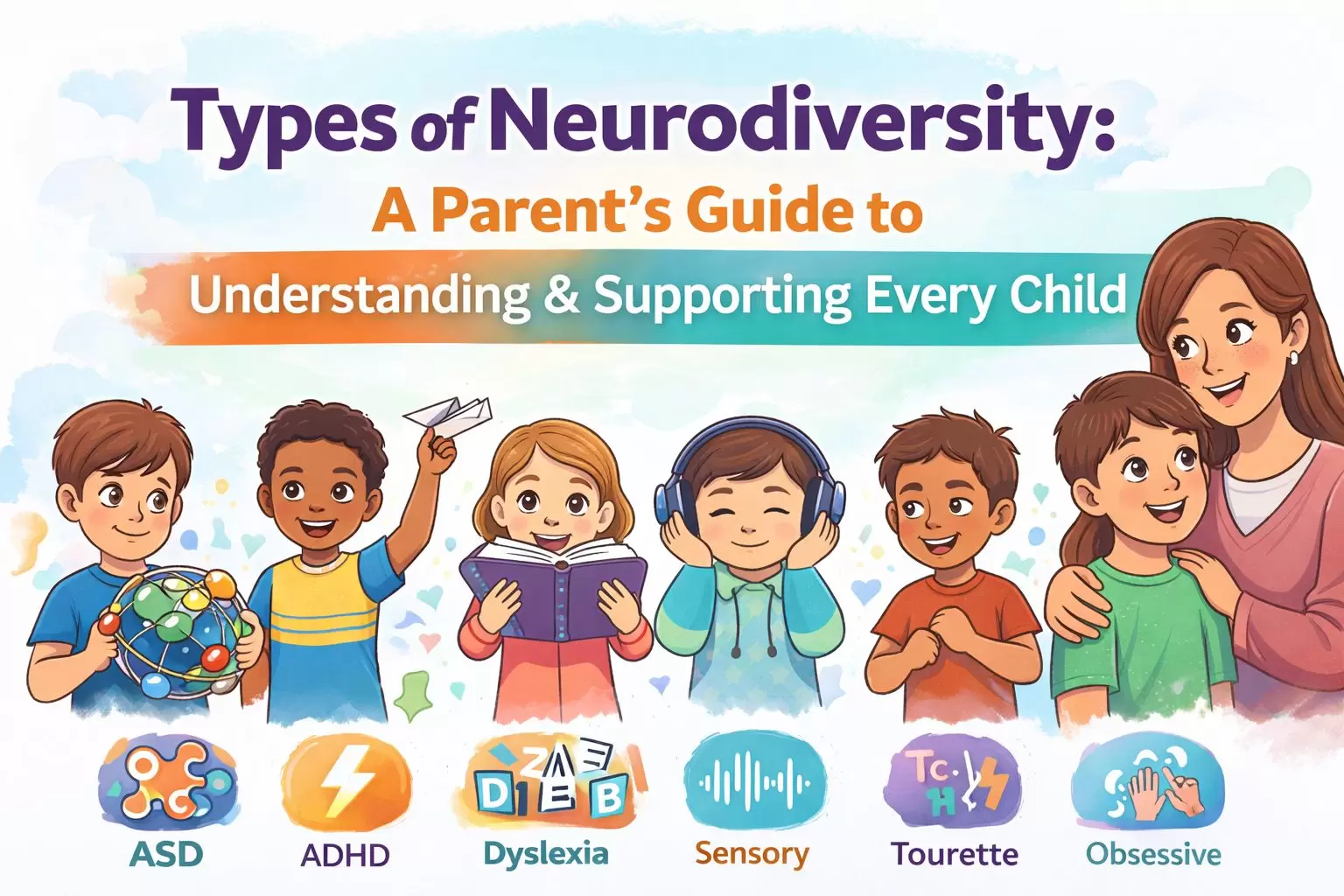
Neurodiversity refers to the natural range of differences in how people think, learn, pay attention, process sensory information, and interact with the world. The most commonly recognised types include Autism Spectrum Disorder (ASD), Attention-Deficit/Hyperactivity Disorder (ADHD), dyslexia, dyspraxia, sensory processing differences, Tourette Syndrome, and Obsessive-Compulsive Disorder (OCD). Understanding these types helps parents recognise both strengths and challenges, and access the right support for their child.
Autism Spectrum Disorder (ASD)
Autism is a developmental profile that affects social interaction, communication, routines, and sensory experiences. Children on the autism spectrum may prefer routines, interpret language literally, and notice patterns others miss. Their strengths can include deep focus, attention to detail, and strong memory for topics of interest.
ADHD affects how attention, activity levels and self-control are regulated. Children with ADHD may be energetic, creative, and quick thinkers, but may find organisation, time management, and task follow-through challenging. With support at home and school, their creativity and problem-solving abilities can be powerful assets.
Dyslexia is a learning difference that primarily affects reading and spelling skills. It doesn’t reflect intelligence. Many dyslexic children excel in creative fields, visual thinking, and big-picture problem-solving. Early recognition and multisensory reading support make a significant difference.
Dyspraxia affects motor planning — how the brain organises movement. Children may seem uncoordinated or take longer to master tasks like handwriting or tying shoelaces. With understanding and patience, many develop alternative strategies that support success at school and in daily life.
Sensory Processing Differences
Some children are highly sensitive to sound, light, or touch, while others seek intense sensory input. These sensory profiles influence behaviour, mood, and comfort in different environments. Recognising sensory needs helps parents create supports that reduce overwhelm.
Tourette Syndrome
Tourette Syndrome involves involuntary movements or sounds called tics. These are not intentional behaviours but neurological expressions. With encouragement and supportive environments, many children learn to manage tics and thrive socially and academically.
Obsessive-Compulsive Patterns
Some children show strong need for certainty, routines, or repetitive thinking to feel safe. When these patterns interfere with daily life, parental understanding and structured support help reduce anxiety and improve flexibility.
How Parents Can Support Their Neurodivergent Child
Empathy and Education
Learning how your child experiences the world is the first step toward peaceful and effective support. Understanding that behaviour often has meaning behind it can shift interactions from conflict to connection.
Partner with teachers to build support that fits your child’s strengths and challenges. This may include classroom adjustments, sensory breaks, visual routines, or structured learning supports that respect how your child learns best.
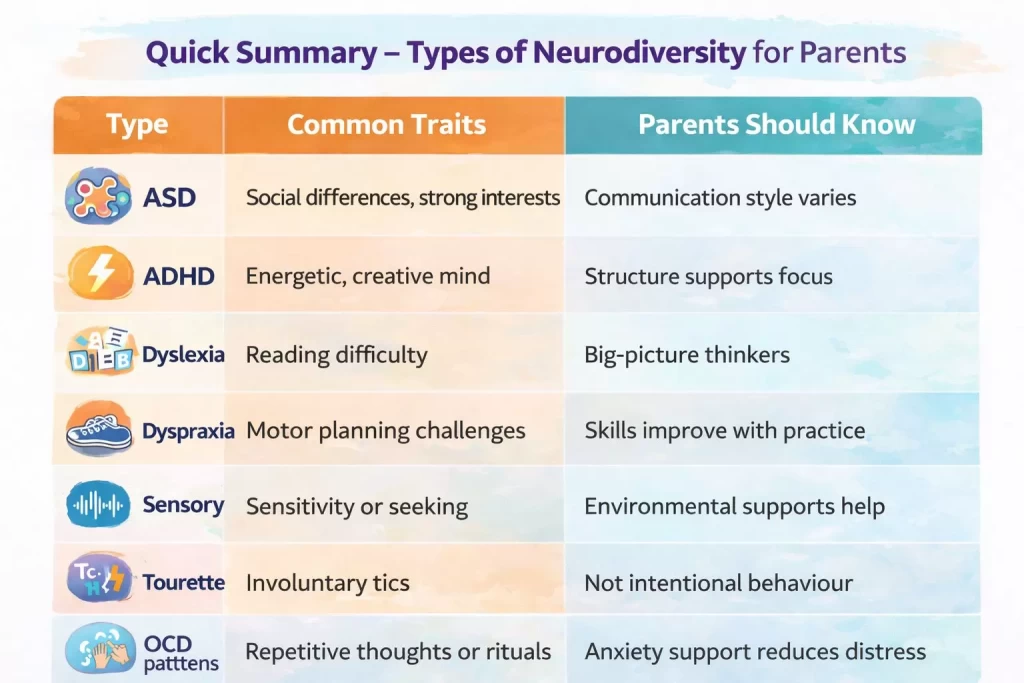
Quick Summary – Types of Neurodiversity for Parents
FAQs for Parents
What are the most common types of neurodiversity?
Autism, ADHD, dyslexia, dyspraxia, sensory processing differences, Tourette Syndrome, and OCD patterns are commonly recognised types.
How do I know if my child is neurodivergent?
Signs vary, but difficulties with attention, learning, social interaction, sensory comfort, or behaviour differences may suggest neurodivergent profiles. Early observation and professional guidance help clarify support options.
How can parents support neurodivergent children?
Understand how your child experiences the world, create consistent routines, work with schools on appropriate accommodations, and emphasise strengths over deficits.